Next: Conical Bores: 1D Spherical Wave Up: Conical Air Column Acoustics Previous: Conical Air Column Acoustics
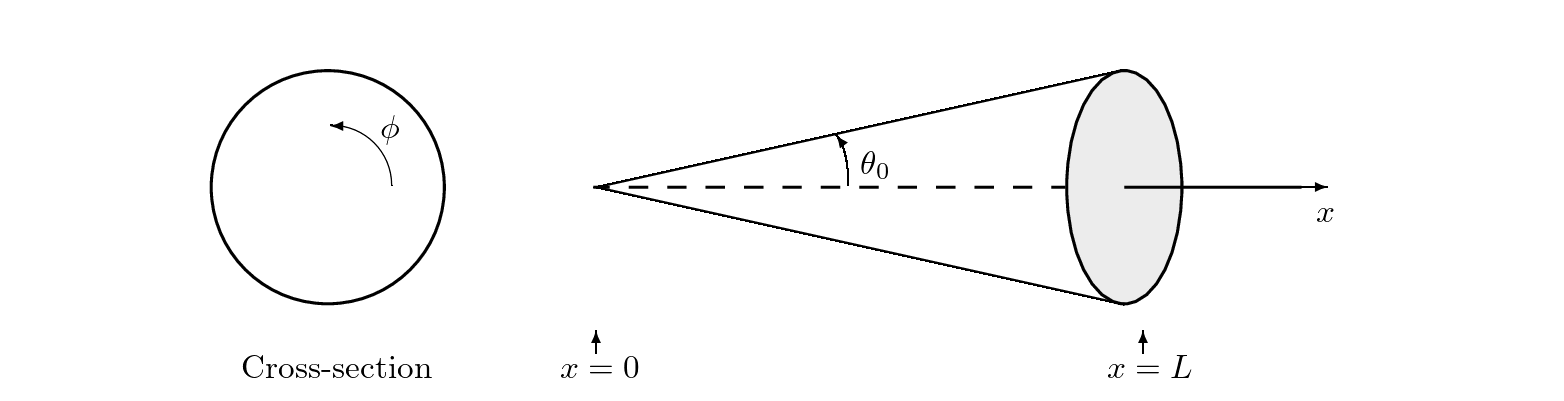
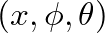 is depicted in Fig. 1. The wave equation in this geometric coordinate system is
 (1)
(1)
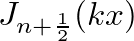 is a Bessel function and
 are associated Legendre functions.
 is
is
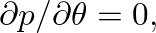 which can be met by adjusting the values of
  and
and  so that an extremum of
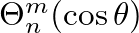 occurs at the wall.
is nontrivial, and an accurate determination of cutoff frequencies for these modes is beyond the scope of this course. For axial symmetric waves ( ), Hoersch (1925) has presented a method for determining values of that satisfy the boundary condition in conical horns of various angles.
 for saxophones, oboes, and bassoons are
 and
and  respectively (Nederveen, 1969). Using this procedure, the lowest values of calculated for these angles are 109.27, 145.86, and 438.58, respectively.
support these values and further indicate that solutions with  and approximately equal to 53, 70, and 213, respectively are possible. These are nodal plane modes that correspond to the
  mode in cylinders. Cutoff frequencies for these values of are determined where the expression
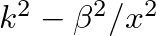 becomes positive.
 so that waves of sinusoidal type having
  are only possible in the outer or wider portions of a cone (Benade and Jansson, 1974). Near the cone tip, any higher order modes that are excited will be evanescent.
mode solutions given above, the corresponding cutoff frequencies are approximately  kHz for saxophones,
  kHz for oboes, and
  kHz for bassoons, where
  is given in meters.
mode requires transverse circular motion, which will not occur with any regularity in musical instruments. As mentioned with regard to cylindrical bores, evanescent mode losses may occur in a woodwind instrument mouthpiece and near toneholes.

| ©2004-2024 McGill University. All Rights Reserved. Maintained by Gary P. Scavone. |