Next: Cylindrical Pipes: Plane Wave Propagation Up: Cylindrical Air Column Acoustics Previous: Cylindrical Air Column Acoustics
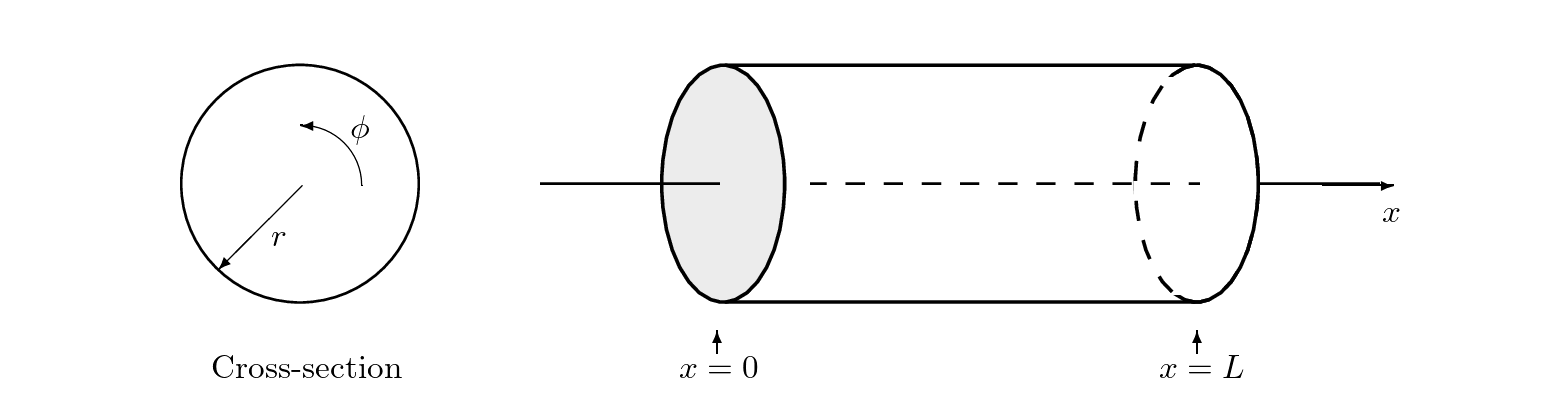
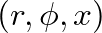 is depicted in Fig. 6.
 (13)
(13)
 is a Bessel function,
  is the radius of the cylinder, and
  denotes the positive zeros of the derivative
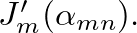
 varies with mode
  as
as
 (15)
(15)
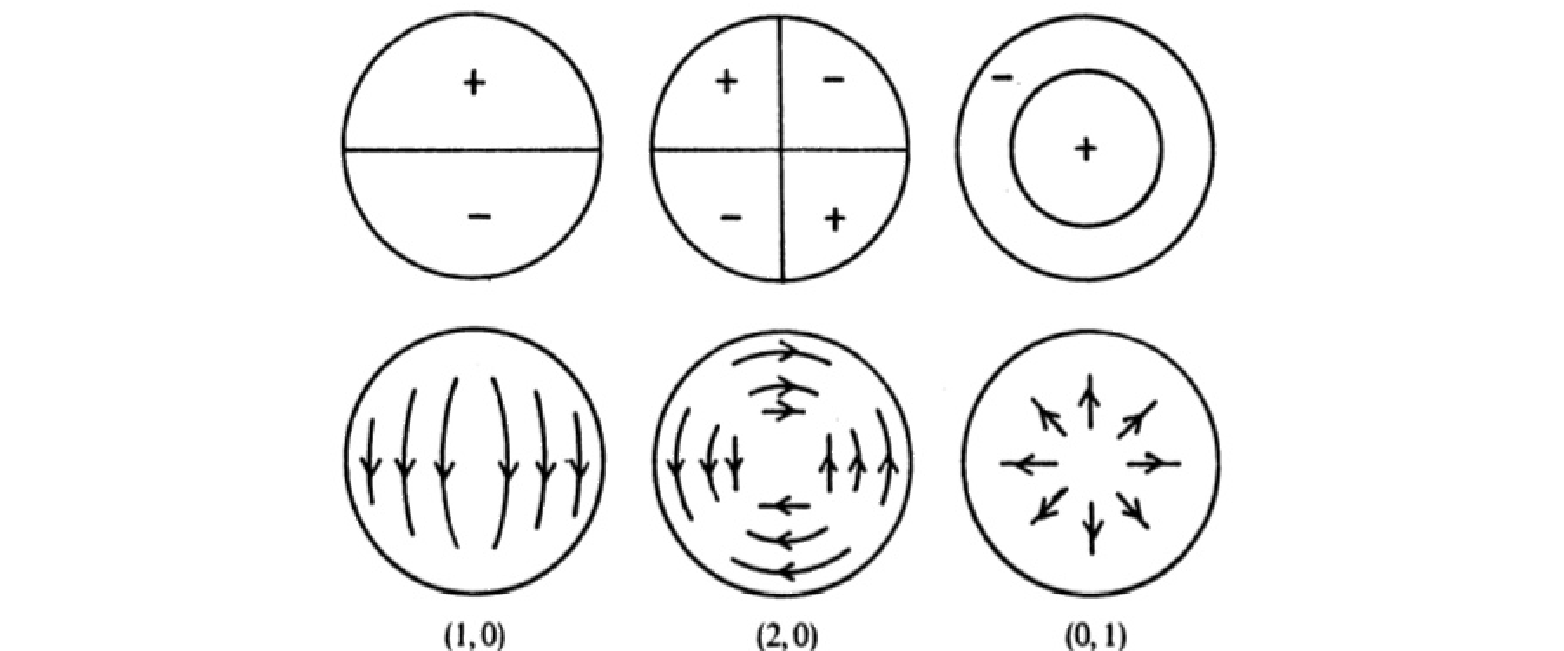
 refers to nodal diameters and
  refers to nodal circles (see Fig. 7 below).
 for which

 is positive (or
  is real), so that the frequency must exceed a critical (often called “cutoff”) value given by
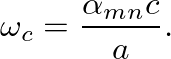 (16)
(16)
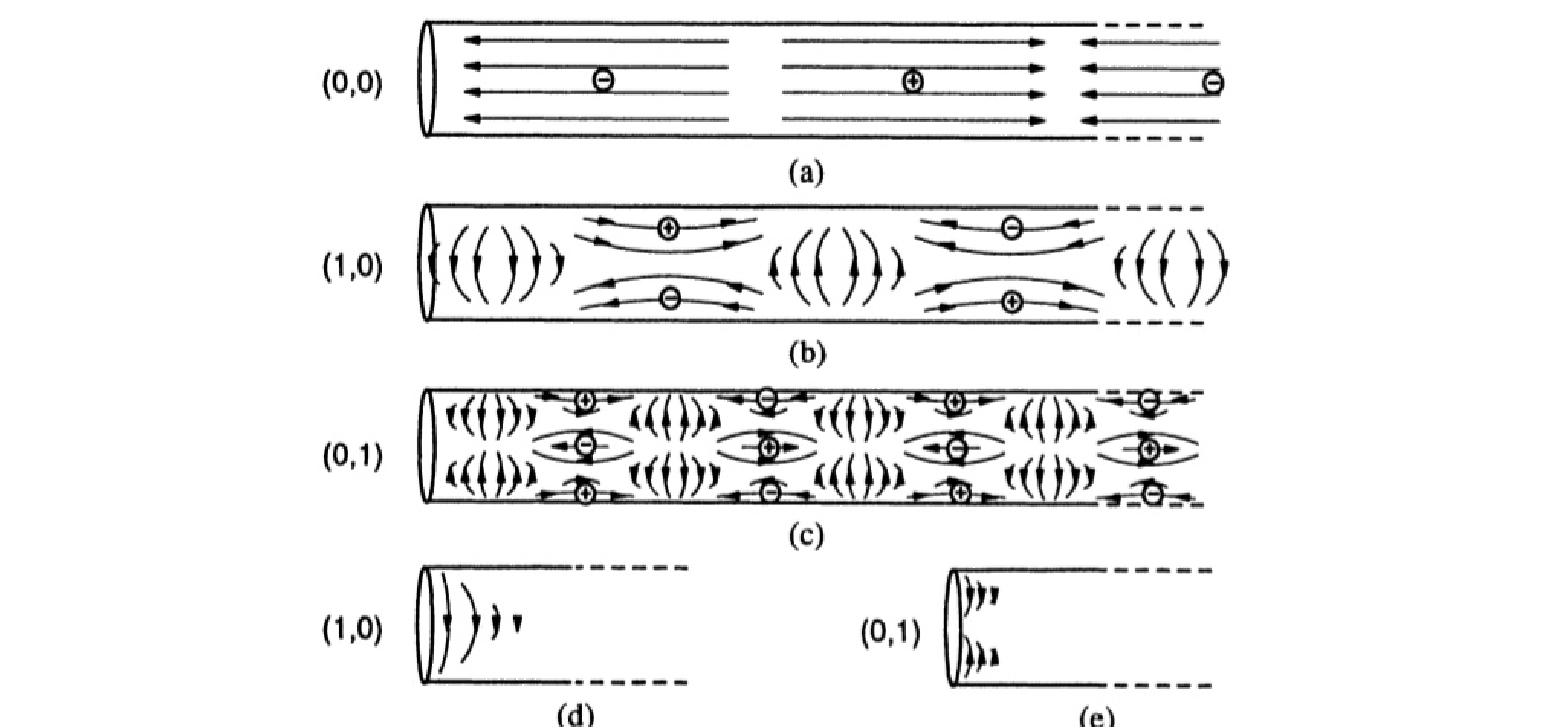
 the mode is evanescent and decays exponentially with distance (see animation).
 |
 and
and  nodal plane modes, which have cutoff frequencies
 and
and
 respectively.
 meters per second for a temperature of
  C, these cutoff frequencies are 13.56 kHz and 22.5 kHz for the clarinet and 11.96 kHz and 19.8 kHz for the flute.
 |

| ©2004-2024 McGill University. All Rights Reserved. Maintained by Gary P. Scavone. |