


Next: Digital Waveguide Theory Up: Impedance Previous: Wave Impedance
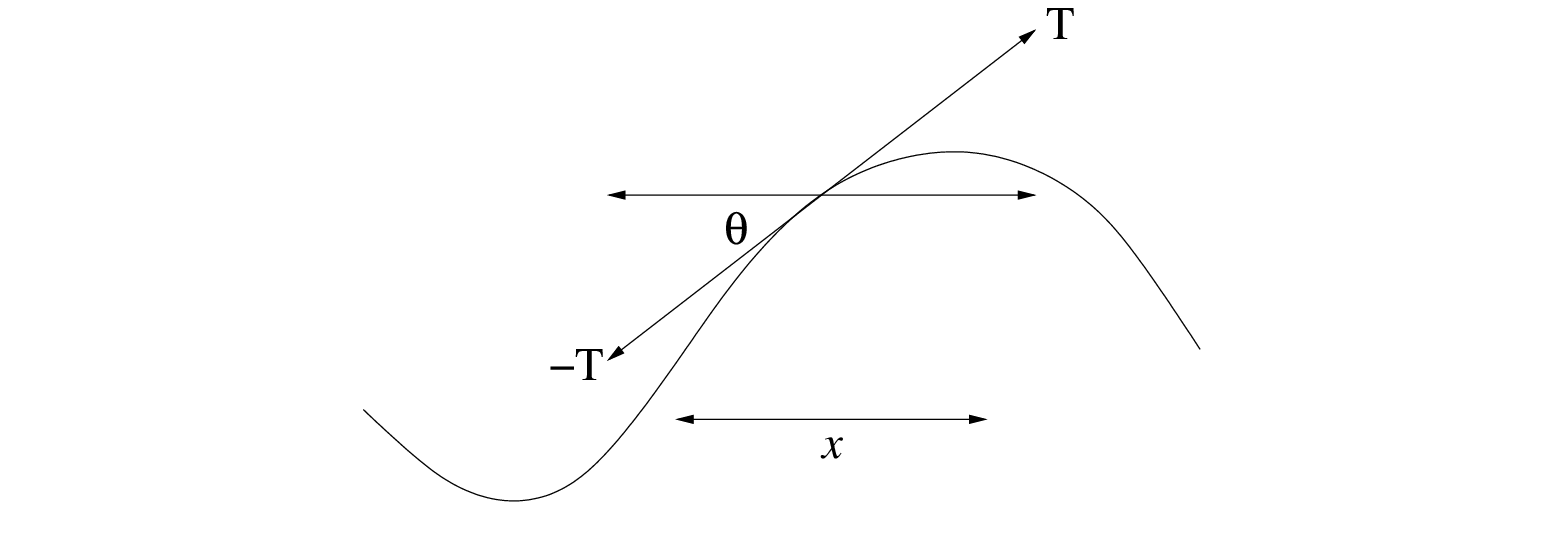
 and tension
  rigidly fixed at position
 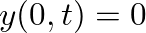 .
.
 by a transverse sinusoidal force in the form of a complex exponential:
 .
.
 and
and  are complex constants that describe the amplitude and phase of each traveling-wave component with respect to the driving force and
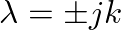 .
.
), the boundary condition  implies
![$\displaystyle 0 = [C^{+} e^{-j k L} + C^{-} e^{j k L}] e^{j \omega t}.
$](img81.png)
, the driving force must be compensated by a string force of
 , resulting in the expression

and , which when substituted back into Eq. 6 gives
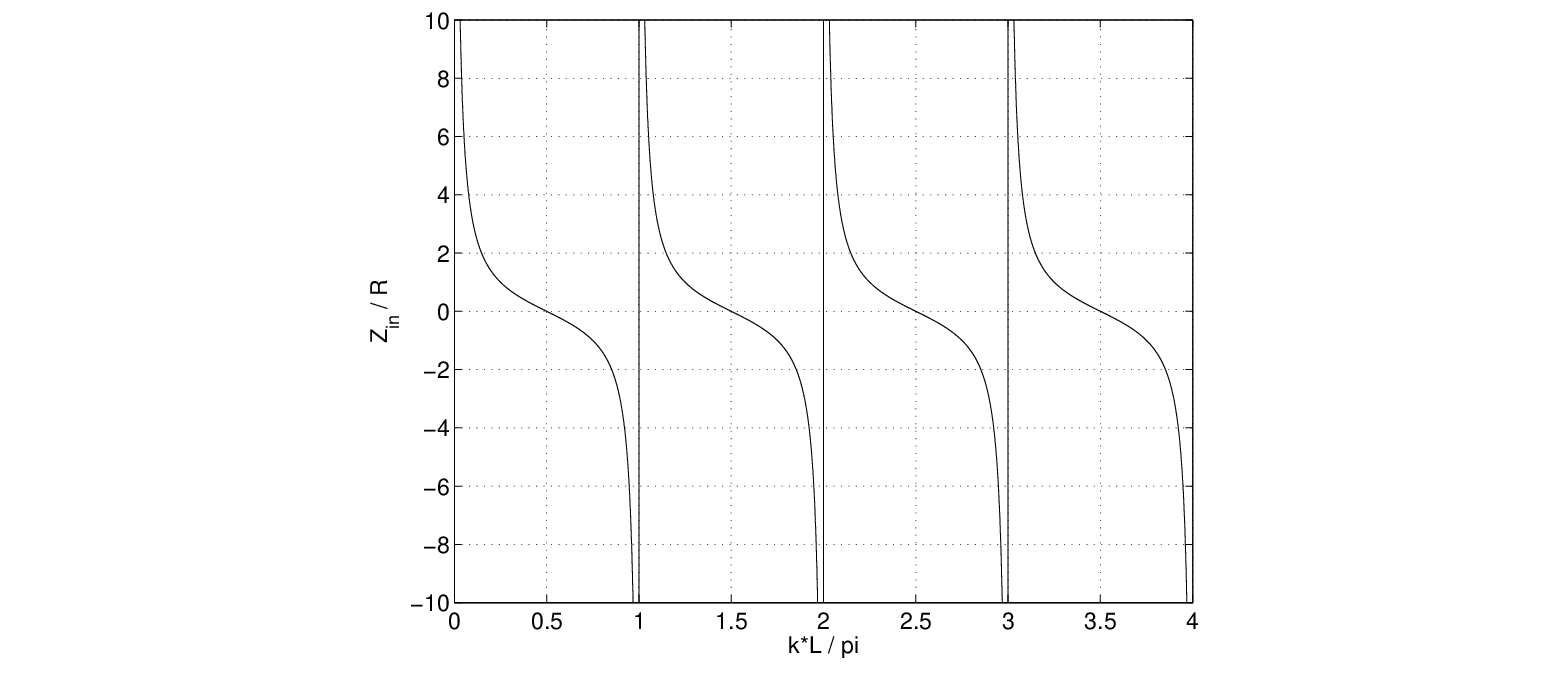

 is defined as the ratio of force to velocity at the driving point ():

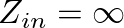 is the characteristic impedance of the string. This function is plotted below.
 , and
, and 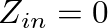 when
when
 Note that this analysis does not account for any losses in the string or end support.
) is fixed, the velocity of the string at that point must equal zero. This would correspond to an infinite impedance. Thus, the resonance frequencies of a string rigidly fixed at both its ends correspond to the frequencies at which
 , or when
, from which we find the resonance frequencies
, or when
, from which we find the resonance frequencies
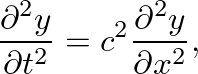 for
for
 (which are the same as those found for the standing waves).
) is perfectly free, the force of the string at that point must equal zero. This would correspond to an impedance of zero. Thus, the resonance frequencies of a string free on one end and rigidly fixed at the other correspond to the frequencies at which  , or when
, from which we find the resonance frequencies
, or when
, from which we find the resonance frequencies
 for
(which occur at odd integer multiples of the fundamental
for
(which occur at odd integer multiples of the fundamental
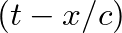 ).
).

| ©2004-2026 McGill University. All Rights Reserved. Maintained by Gary P. Scavone. |

