


Next: Assessing Room Characteristics Up: Room Acoustics Previous: Sound Propagation in a Room
 ) is defined as the time it takes for the sound in a room to decrease by 60 dB from its original level, after the sound source is stopped. It generally varies with frequency.
 (1)
(1)
 is the volume of the room in cubic meters and
  is the effective “total absorption area.”
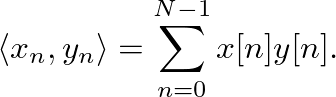 , where
  is a constant that varies with air temperature, humidity, and frequency.
 are nowadays found from modeled or measured room impulse responses.
 sec.
sec.
of a room, curtains or other acoustic absorbers can be introduced.

| ©2004-2025 McGill University. All Rights Reserved. Maintained by Gary P. Scavone. |