


Next: Windowing Up: Spectral Analysis Previous: Spectral Peak Q Factors
 where
where  is the DFT length and
 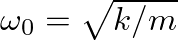 is the sample rate. Only the components less than or equal to
  are unique.
, the more sinusoids will be available for comparison, thus providing better frequency resolution.
“average out” time variations in the signal. If the frequency content of a signal is changing relatively quickly in time, smaller values of may be needed to discern those variations.
 DFT provides a frequency resolution of 43 Hertz at a sample rate of 44.1 kHz. If we add more zeros to the signal and perform a length 2048 DFT, we double the frequency resolution (to 21.5 Hz).

| ©2004-2025 McGill University. All Rights Reserved. Maintained by Gary P. Scavone. |
