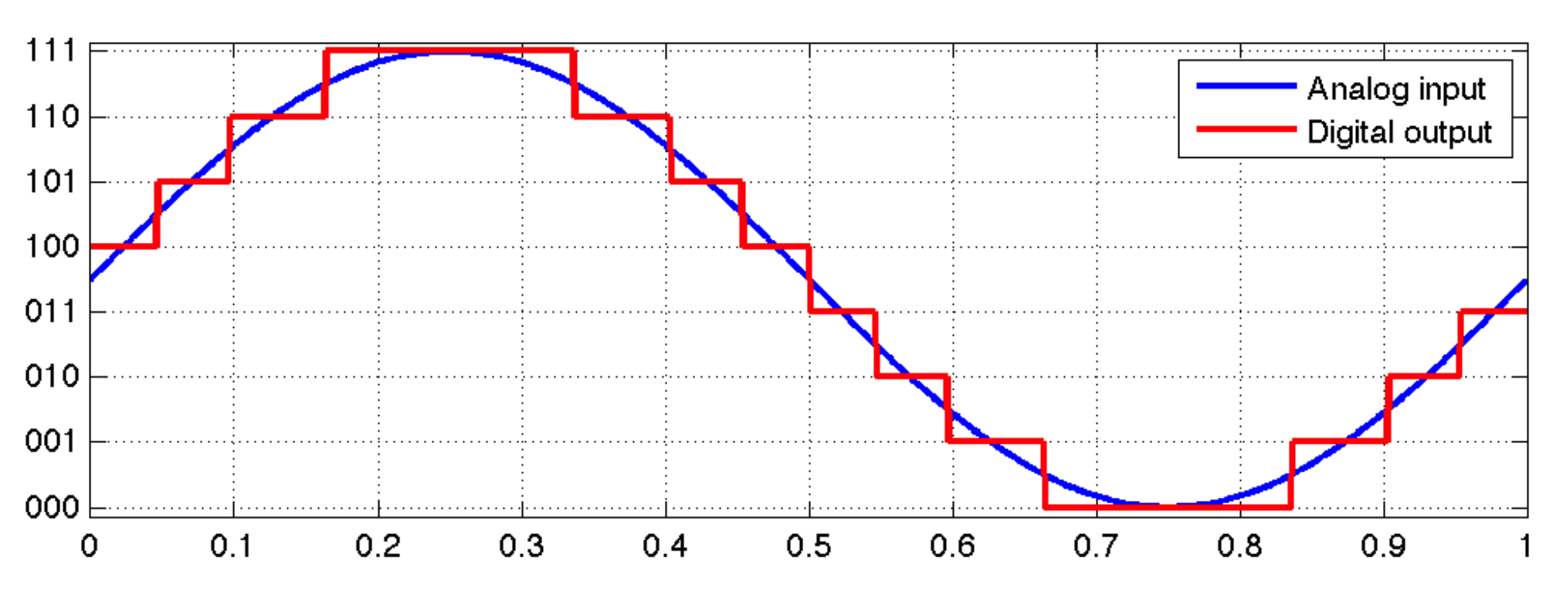
Sounds are typically measured via transducers that convert air pressure fluctuations into electrical signals over time.
Electrical sound signals are continuous (in both time and amplitude), analog representations of air pressure variations.
These representations can subsequently be stored and/or processed using signal processing techniques.
In order to process sound signals with computers, the signals must be sampled both in time and amplitude (digitized).
Numbers in a computer can be represented in a variety of different formats (8-bit, 16-bit, 32-bit integers or floating-point numbers).
The choice of a particular number format can have significant influence on the quality of sampled signals.
In general, each bit of precision (in a binary system) provides about 6 dB of dynamic range (a doubling of sound pressure). CD quality recordings use 16-bit integer formats with an approximate dynamic range of 96 dB.
Certain musical sounds may exceed a 96 dB dynamic range, so larger sample sizes might be substantiated (20- and 24-bit formats).